

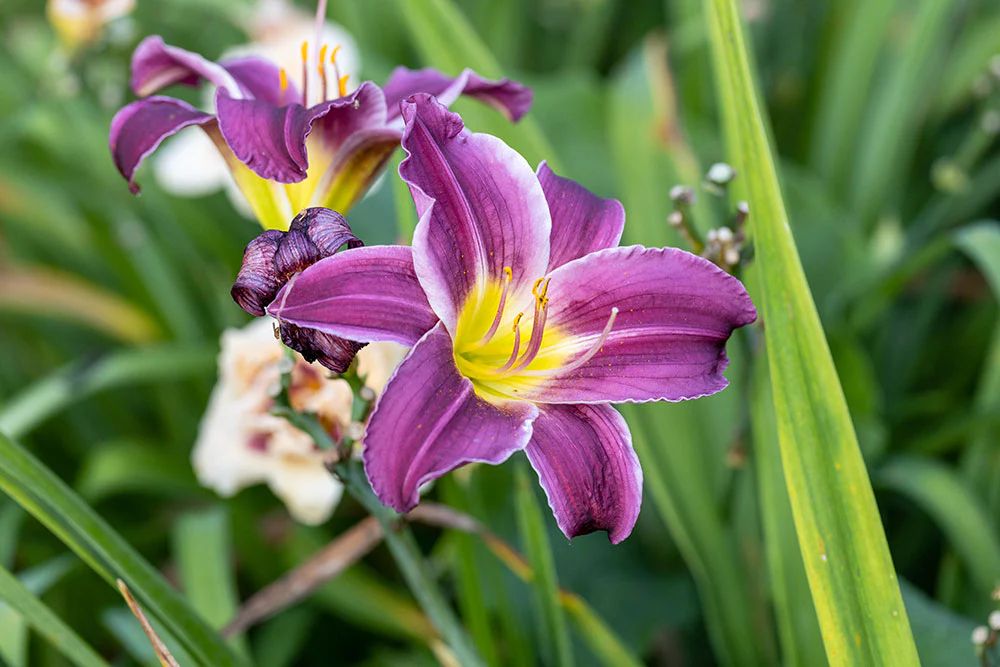
Purple daylilies do more than add colour. They change the structure of a border, sharpen surrounding tones, and give a planting scheme a level of contrast that many gardeners struggle to achieve with softer pinks, yellows, or creams alone. In ornamental gardens, they can act as a visual anchor in much the same way as dark foliage shrubs or deep-toned salvias. Used well, they make neighbouring flowers look brighter, while also giving the whole planting a more settled and deliberate appearance.
Professional advice from the premier grower of Daylily plants SwallowtailDaylilies is straightforward: gardeners looking at purple daylilies plants for sale should pay close attention not only to flower colour, but also to petal texture, throat colour, branching, and how a cultivar performs across changing weather. Strong purple tones are most effective when the plant also has good substance and a clear habit, because depth in the border depends on the whole plant carrying the flower well rather than the bloom colour alone.
Why Purple Daylilies Matter in Garden Design
Purple is often described simply as a rich colour, but in garden design it functions in a more specific way. It adds visual weight. That matters in mixed borders, courtyard gardens, and longer ornamental beds where colour can easily look scattered or thin. A stand of pale flowers may look pleasant in June, yet lack definition from a distance. Purple daylilies solve that problem by introducing density without making a border feel heavy in the way that dark maroon flowers sometimes can.
The effect is especially useful in British gardens, where light conditions shift constantly. On bright mornings, purple flowers can appear clear and crisp against silver leaves or lime greens. On overcast afternoons, they often read as a deep mid-tone that still holds shape when softer shades flatten. This flexibility makes them valuable in climates where summer sun is welcome but not always guaranteed.
Purple daylilies also help bridge different colour families. In practical terms, they can connect hot colours and cool colours in the same planting area. A border that includes orange geums, cream roses, blue catmint, and dark heucheras can easily become disjointed unless one colour ties the scheme together. Purple often performs that job well because it sits comfortably beside both warm and cool companions. It can calm stronger colours without muting them.
Another reason they matter is seasonality. In many gardens, late spring carries a rush of fresh greens, bulbs, and early perennials, but midsummer can look less intentional once the first wave has passed. Daylilies come into their own at the point when many borders need renewed structure. A good purple cultivar can keep the planting from drifting into a mix of unrelated colours and forms.
There is also a practical design advantage. Daylily foliage forms a useful base even when the flowers are not open. Arching leaves soften edges, conceal the lower growth of neighbouring plants, and create a neat mass that is easy to combine with upright spikes, mounding perennials, and clipped forms. In this way, purple daylilies are not just flowers dropped into a border. They are structural perennials that happen to carry a striking colour.
Using Purple to Create Depth Rather Than Mere Brightness
Many gardeners choose flowers by individual appeal, yet a border works best when colours have distinct jobs. Purple is not only there to look attractive. It can push part of a border visually backwards, draw attention forward to brighter companions, or create a pause between louder shades. These effects are what make a planting look layered instead of flat.
Depth in a border comes from contrast in both value and placement. A purple daylily planted among pale yellows and soft apricots can create the sense that one section of the planting recedes, giving a longer border a more spacious feel. This is particularly helpful in modest gardens where every design decision has to work harder. You do not need a large country border to benefit from such effects. A narrow suburban bed can gain a more developed appearance simply by including one repeated purple element at intervals.
Contrast, however, is more effective when it is controlled. Too many dark flowers grouped together can form a visual block. Purple daylilies are strongest when used as punctuation rather than wallpaper. Repetition across a bed usually works better than one dense clump in a single corner. The eye then moves from one point to another, reading a pattern instead of a lump of colour.
Throat colour also affects depth. Many purple daylilies feature green, yellow, or gold throats. This detail matters more than many buyers realise. A lighter throat stops a flower from becoming visually muddy, especially in weak light. It gives the bloom an internal source of brightness, which helps the colour remain legible from several metres away. In a mixed planting, that small contrast can keep the flower distinct even among dense foliage.
Petal surface contributes too. Flowers with a satin or slightly luminous finish often read more clearly than those with a dull surface, particularly after rain or during grey weather. Gardeners who want dependable contrast should think beyond catalogue colour descriptions. “Purple” covers a wide range, from cool plum to near-black violet, and each behaves differently in the border.
The most successful approach is to treat purple daylilies as middle-to-late-season design tools. They are not merely decorative additions but working plants that shape how other colours are seen. Once that is understood, selection becomes less random and much more rewarding.
Choosing Cultivars for Performance, Not Just Shade
The temptation with daylilies is to buy by photograph. That is understandable, but a striking bloom image tells only part of the story. In practice, the best purple daylilies are those that combine colour with consistency. A flower may look excellent in ideal weather yet slump, bleach, or close poorly in ordinary garden conditions. For ornamental use, performance matters as much as novelty.
Substance is one of the first things experienced growers look for. Thick petals tend to hold colour better, resist weather damage, and keep their form through a longer part of the day. In purple cultivars, this is particularly important because thin petals can lose the depth that gives the flower its value in the border. A bloom that starts the day as a clear purple and fades rapidly to a washed tone is far less useful than one that keeps a strong, stable shade.
Branching and bud count matter for the same reason. A plant with several well-spaced branches and a generous number of buds provides a longer display and a more balanced shape. This is valuable in ornamental gardens where continuity matters. One outstanding flower is pleasing, but repeated blooms across several weeks give the border rhythm. Scapes should also hold the flowers clear of the foliage. If blooms sit too low, the effect is congested and much of the contrast is lost.
Height is another point often overlooked. Taller purple daylilies can be used further back in a border to create depth behind softer foreground planting. Mid-height types are more versatile and often better suited to smaller gardens, where extremely tall scapes may appear out of proportion. The aim is not simply to choose the darkest flower, but to choose a plant whose scale fits the space.
Gardeners should also note flowering season. Early, mid, and late cultivars each have a role, but combining more than one flowering time often gives the best result. Purple tones repeated from early summer into late summer create coherence across the whole season. In gardens with limited room, this can be more effective than collecting many different colours that peak at once and then disappear.
The strongest growers often recommend thinking in terms of garden use rather than collecting for novelty. Ask whether the plant will carry itself well, repeat cleanly, and maintain colour through real weather. Those qualities may sound less exciting than unusual patterns or dramatic edges, but they are exactly what make a border look composed year after year.
Pairing Purple Daylilies with Other Plants for Stronger Contrast
Purple daylilies are at their best when combined with plants that sharpen their qualities instead of competing with them. The easiest and most reliable partners are those that differ in texture, shape, or temperature. Fine foliage, airy flower forms, and lighter tones all help purple daylilies stand out.
Silver foliage is one of the strongest companions. Artemisia, stachys, and some lavenders provide a dry, cool backdrop that emphasises the richness of purple blooms. This works because silver reflects light and gives the eye a resting place. Against that background, purple appears deeper and cleaner. Blue-green foliage can achieve a similar effect, though often with a softer finish.
For stronger contrast, yellow is highly effective, but it needs restraint. Bright yellow companions can become harsh if used too freely. Better results usually come from buttery or lemon shades rather than hard primary yellow. Coreopsis, achillea in softer yellows, or a restrained use of yellow daylilies nearby can make purple flowers look more vivid without creating a loud, short-lived effect.
White and cream flowers offer another useful pairing, especially in evening gardens or areas viewed from indoors. Purple daylilies beside white phlox, pale roses, or airy gaura create a clear, readable combination that holds up even in low light. This is one of the most practical ways to use them in smaller gardens, where clarity often matters more than complexity.
Texture is just as important as colour. The broad, strappy foliage of daylilies benefits from contrast with narrow grasses, ferny leaves, or vertical spires. Plants such as veronicastrum, salvia, nepeta, or molinia can complement purple daylilies by introducing lines and movement around the heavier flower form. This stops the planting from becoming too rounded or static.
Dark foliage pairings need more care. Heucheras, smoky dahlias, and purple-leaved shrubs can produce a sophisticated effect, but only if there is enough light contrast elsewhere. Without that relief, the border can close in on itself. A practical solution is to place dark foliage behind purple daylilies and break the combination with lighter perennials in front.
Companion planting should also take flowering period into account. Purple daylilies have more impact when neighbouring plants are either just starting, in full stride, or offering a contrasting after-flower texture. Seed heads, grasses, and clean foliage can all extend the value of the combination beyond the daylily’s peak. Good pairing is not about matching colours alone. It is about making sure the daylily contributes to a longer and more deliberate seasonal picture.
Growing Conditions That Preserve Colour and Form
Purple flowers can be demanding because strong colour shows flaws quickly. A bloom with poor substance, drought stress, or sun scorch will not deliver the same depth as a well-grown plant. Fortunately, daylilies are generally adaptable, and most problems can be reduced by giving attention to a few essentials.
Light is the first factor. In Britain, most daylilies perform well in full sun, but some purple cultivars benefit from light shade during the hottest part of the afternoon, particularly in more exposed gardens or unusually hot summers. Too little sun reduces flowering, yet relentless heat can fade darker shades. A position with good morning and midday light often gives the best balance.
Soil should be fertile but well drained. Daylilies are tolerant plants, though they perform more convincingly in ground that holds moisture without staying wet. Rich, workable soil helps them build strong scapes and fuller buds, which in turn improves the display. Before planting, incorporating compost or other organic matter is usually worthwhile, especially in thin or exhausted borders.
Watering matters most during establishment and at the point when buds are forming. Intermittent drought may not kill a daylily, but it can reduce flower size and shorten bloom life. Purple types that are prized for contrast need to be grown steadily if they are to deliver the clarity and saturation expected of them. A stressed plant rarely shows its best colour.
Feeding should be moderate rather than excessive. Overfeeding, especially with high nitrogen, can encourage lush foliage at the expense of flowers. A balanced spring feed and organic mulching are generally enough in a decent garden soil. Mulch also helps maintain moisture and keeps the root zone cooler, both of which support flower quality through summer.
Division is another practical consideration. Daylilies can remain in place for years, but congested clumps may flower less freely. Lifting and dividing every few years, when needed, helps maintain vigour. It also gives gardeners the chance to repeat a good purple cultivar through the border, increasing visual unity without buying entirely new plants.
Deadheading spent flowers and removing collapsed scapes after flowering improves appearance and keeps the planting orderly. Since each bloom lasts only a day, regular tidying makes a noticeable difference. In ornamental gardens, this small routine is part of why daylilies can look refined rather than temporary.
When cultural conditions are right, the depth of purple becomes much more dependable. The point is not perfection. It is consistency, so that the plant performs as a design element as well as a perennial.
Making Purple Daylilies Work in Modern British Gardens
British gardens now cover a wide range of styles, from compact urban plots and gravel schemes to traditional mixed borders and more naturalistic planting. Purple daylilies can fit into all of them, but their role changes depending on the setting. Understanding that role is what turns them from attractive flowers into genuinely useful garden plants.
In smaller gardens, restraint is usually the better strategy. One or two well-chosen purple cultivars repeated through a planting can give coherence without crowding the palette. They work particularly well where gardens are viewed from a sitting room, kitchen, or terrace, because the colour reads clearly at a distance and in variable light. A modest repetition of one strong purple daylily can make a compact bed look more considered than a wider mix of unrelated shades.
In larger borders, purple daylilies can be woven through warmer or softer colour schemes to stop them drifting. Peach, apricot, and pale yellow combinations are popular, but they can become washed out in midsummer. Purple restores definition. It also helps late-season planting stay grounded as grasses and taller perennials begin to dominate.
They suit contemporary gardens too, especially where hard landscaping, pale paving, or corten steel call for planting with clarity and substance. The flower shape is softer than that of architectural plants, yet the colour carries enough authority to hold its own in a clean-lined setting. Combined with grasses or repeated in broad drifts, purple daylilies can feel modern without looking forced.
There is also a practical reason for their continued appeal. Many gardeners want plants that are ornamental but not delicate. Daylilies meet that need. They are relatively forgiving, easy to maintain once established, and capable of giving a strong seasonal display without the intensive staking and feeding some border plants require. Purple selections add a layer of sophistication to that reliability.
The best results come when gardeners stop thinking of them as novelty flowers and start seeing them as design tools with real horticultural value. Depth, contrast, and seasonal structure are not abstract ideas. They are the qualities that make an ornamental garden look settled and intentional. Purple daylilies bring those qualities unusually well, provided they are chosen with care and placed with purpose.
For gardeners who want a border to look richer rather than simply brighter, they remain one of the most useful perennials available.
